Chapter 12: WRC 2026 — A Two-Day Route and One-Day Sprint
Overview
The practical question in this final chapter is: How can a visitor turn two crowded exhibition days—or one compressed day—into a defensible view of China's robotics ecosystem? The answer is not a longer booth checklist. A useful route combines a research question, official schedule, current floor plans, versioned booth evidence, time-boxed conversations, recovery buffers, and a capture protocol that records what was actually observed.
The thesis is that a WRC route is itself an evidence product. It must distinguish a verified anchor from a provisional stop, preserve conflicts instead of quietly choosing a convenient number, and remain revisable on the morning of the visit. The recommended sequence is August 19 C → D for launches and Physical AI, August 20 A → B for procurement, arms, hands, and components, or C → B → A for a one-day sprint. These are analytical priorities, not organizer-designated hall meanings or guarantees that every activity will run at the suggested time.
Official Beijing information lists WRC 2026 for August 19–23, 2026, from 09:00 to 17:00 at Beiren Etrong International Exhibition and Convention Center, 7 Rongchang East Street, Beijing Economic-Technological Development Area [1]. The same listing says online reservation is required, gives the venue area as 40,000 square metres, and places it about 200 metres south of Rongchang Dongjie station on the Yizhuang subway line. It also explicitly tells visitors to follow later official announcements if information changes.
After reading this chapter... - You can build a route from official programme, activity, exhibitor, and map evidence without promoting provisional booths to facts. - You can run the August 19 C-to-D route, the August 20 A-to-B route, or the one-day C-to-B-to-A sprint with explicit time and fallback budgets. - You can ask booth questions that separate a release from a product, a demonstration from a deployment, and a shipment from active use. - You can collect photographs, video, notes, and business cards with consent, provenance, and privacy controls. - You can leave the show with a comparable evidence matrix rather than a folder of disconnected impressions.
12.1 Start with a Question, Not a Hall
A large expo rewards attention capture. Loud performances, moving humanoids, and crowded launches can consume an hour without answering a procurement or research question. Before opening the map, write one primary question and two secondary questions. A research visitor might ask how Physical AI systems expose data, controller, and recovery boundaries. A procurement visitor might ask which hands and arms can meet a payload, interface, safety, and service requirement. An investor might ask which reported orders have become installations, recurring use, and support capacity.
The route should then collect comparable fields. For a robot body, record model, configuration, payload, runtime, control mode, safety boundary, SDK, delivery status, and service region. For a hand, record degrees of freedom, actuation, tactile coverage, interface, calibration, durability protocol, price status, and task evidence. For a model or data system, record observations, actions, dataset source, latency, controller boundary, recovery, version, openness, and customer evidence. A blank field is a result: “not disclosed at booth” is more useful than an inferred answer.
The visitor also needs a stopping rule. Allocate a core list that can fit even if every conversation runs long, an optional list, and a discovery allowance. The guide below uses three status labels:
| Label | Route meaning | Required action |
|---|---|---|
| Verified | an official activity or exhibitor record and the latest applicable floor plan agree at the recorded review point | usable as a mandatory anchor; recheck on the day |
| Provisional | an official source lists the stop, but a second independent official artifact or manual map coordinate is incomplete | keep as an optional target; confirm at directory or information desk before walking |
| Conflict | official or supplied route artifacts disagree, or an older number has not been superseded clearly | do not make it mandatory; preserve both claims and ask the organizer |
“Verified” is not permanent. It means verified against named artifacts at a named time. A booth can move, an activity can be cancelled, or signage can use a shared zone rather than a standalone booth. The route must therefore start with a ten-minute change audit.
12.2 What the Official Programme Supports
The official programme designates August 19 as Release Day and August 20 as Procurement Day [2]. Release Day is described as a day for major results, debut products, and collaborative initiatives. Procurement Day is framed around application demand, negotiation, and supply-chain matching. August 21 is Developer Day, followed by public open days on August 22 and 23. This guide uses the first two days because their stated purposes align with technology discovery and buyer diligence.
The Beijing notice anticipates more than 300 exhibitors, more than 2,000 exhibits, and more than 150 first-time product appearances, alongside more than 60 parallel sessions [2]. These are forward-looking organizer figures, not final attendance or delivered-launch counts. Their practical implication is congestion and choice: even a fast visitor cannot inspect everything.
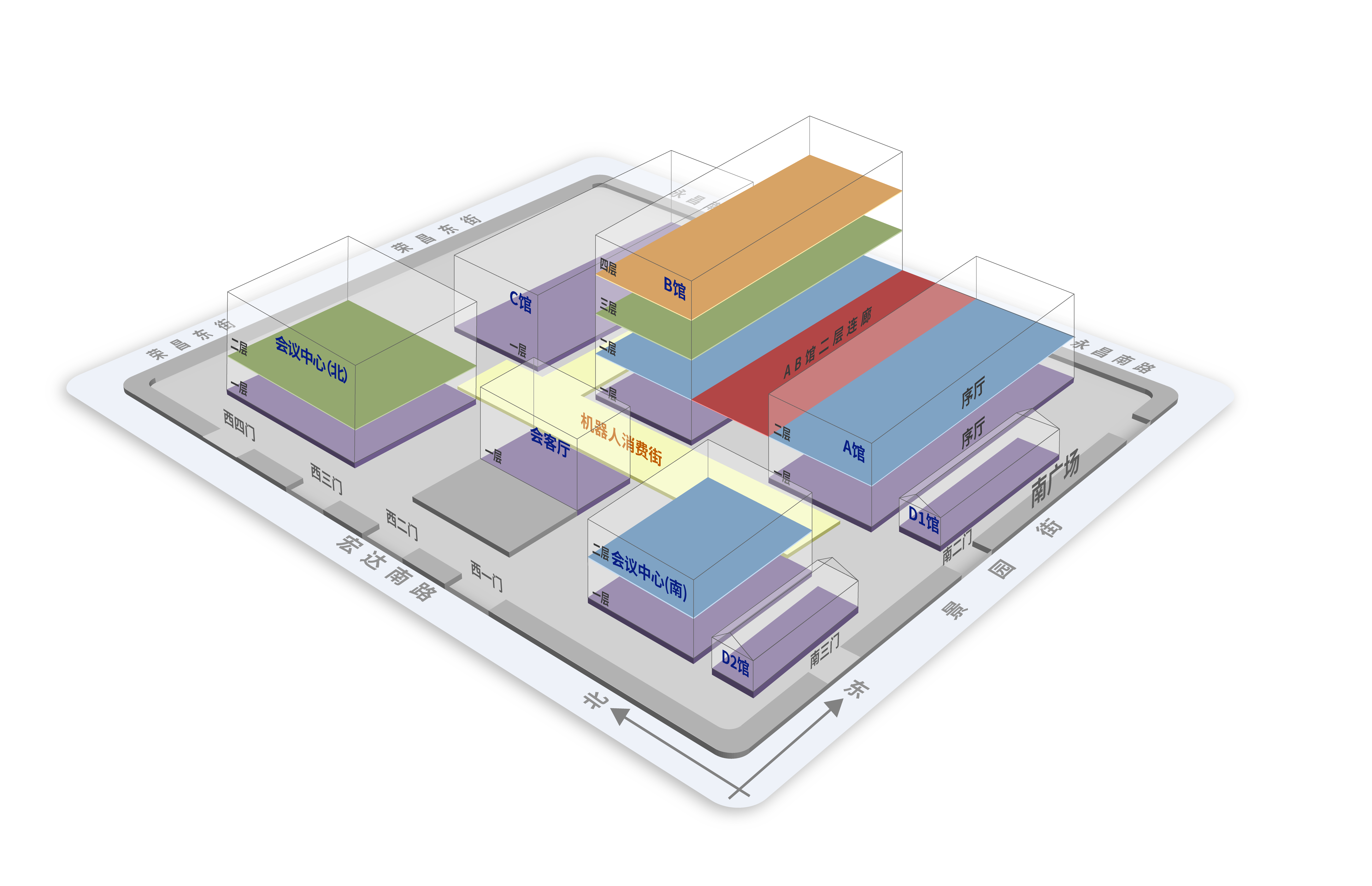
The notice describes four broad exhibition zones and examples spanning manufacturing, logistics, retail, health and eldercare, workplace safety, emergency rescue, sensors, reducers, screws, motors, batteries, hands, and integrated joints. The official image set, however, is operationally expressed through All, A, B, C, D1, and D2 plans [6] [7] [8] [9] [10] [11]. This guide uses hall letters for navigation and topic hypotheses only; it does not invent a permanent semantic correspondence between a marketing zone name and one lettered hall.
The organizer's activities directory is useful because it binds a company, booth number, and an announced activity in one official record [5]. It is still not a timetable guarantee or technical validation. An interactive demonstration at a booth confirms that an activity is advertised. It does not establish autonomy, production status, safety approval, or customer value.
12.3 Version the Map Before You Walk
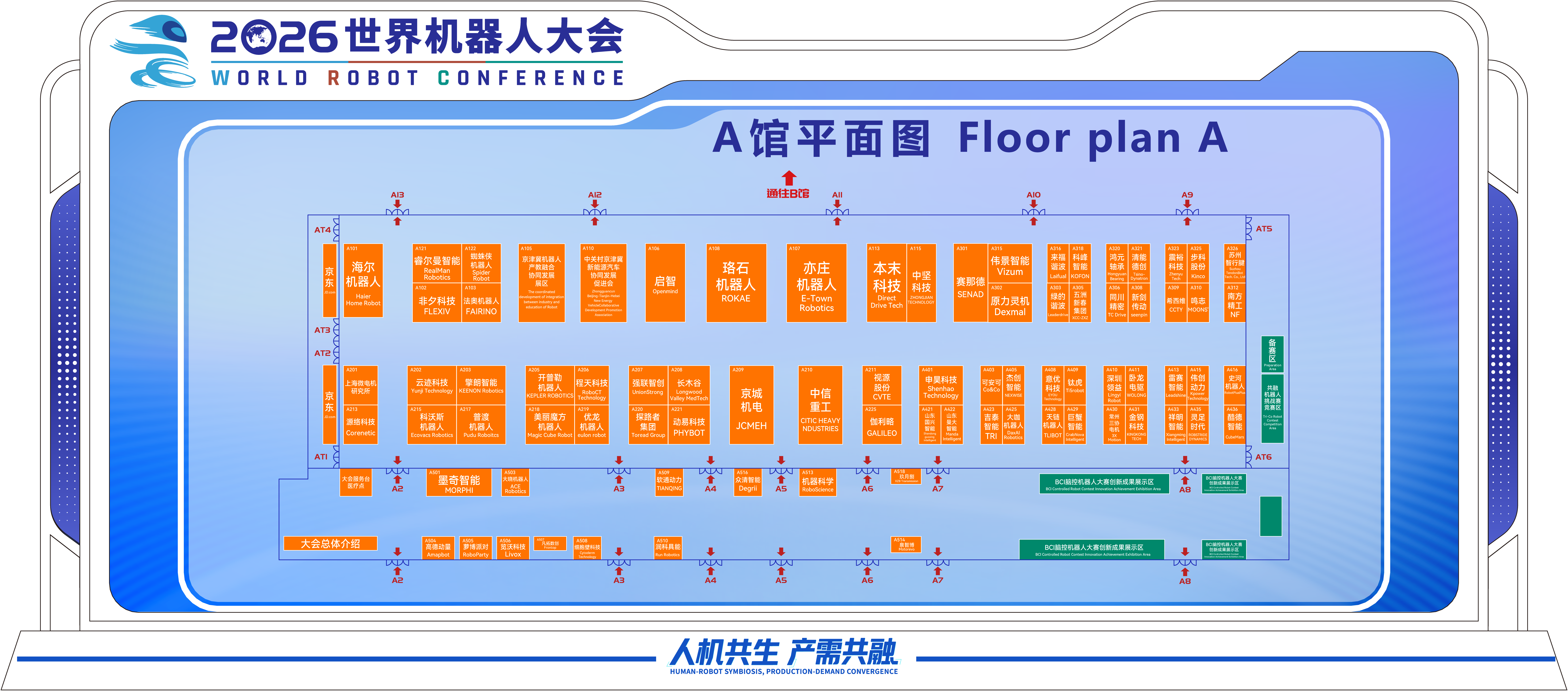
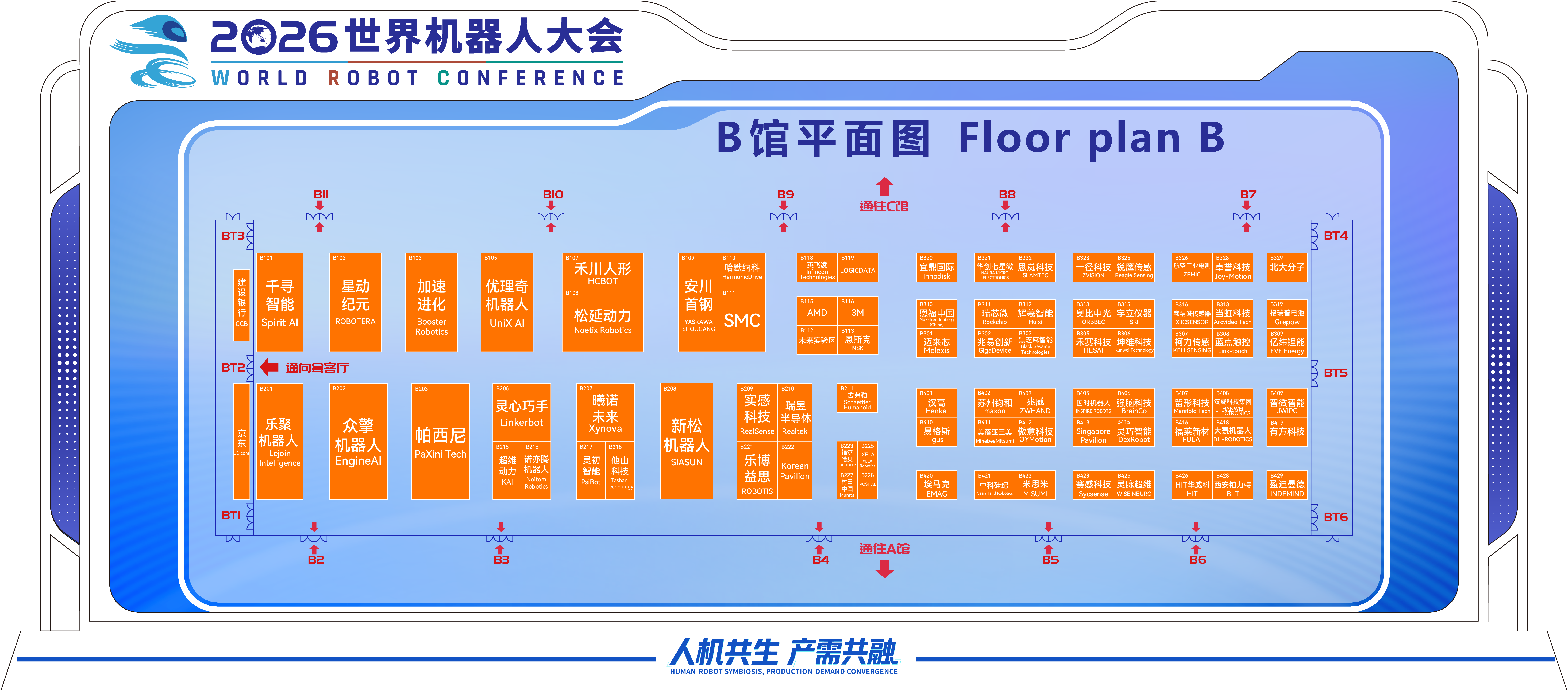
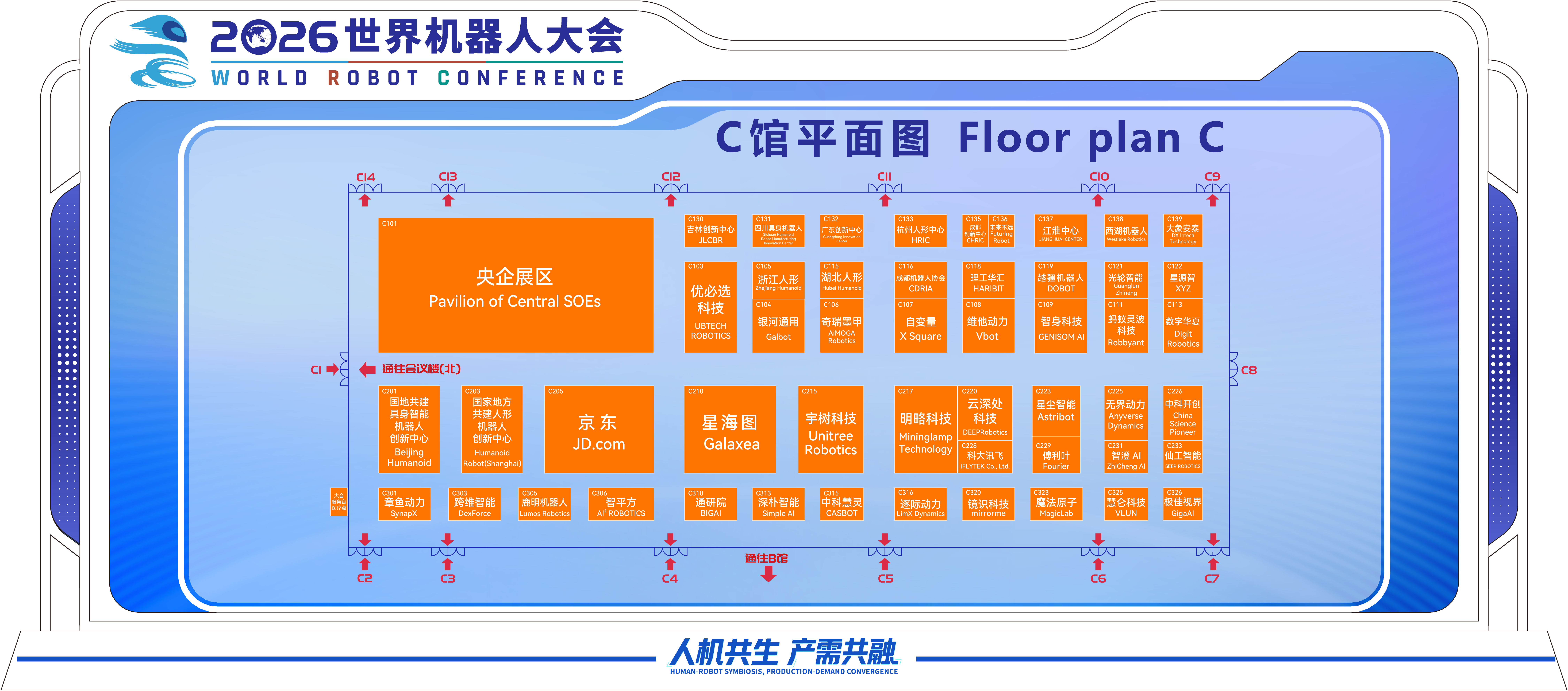
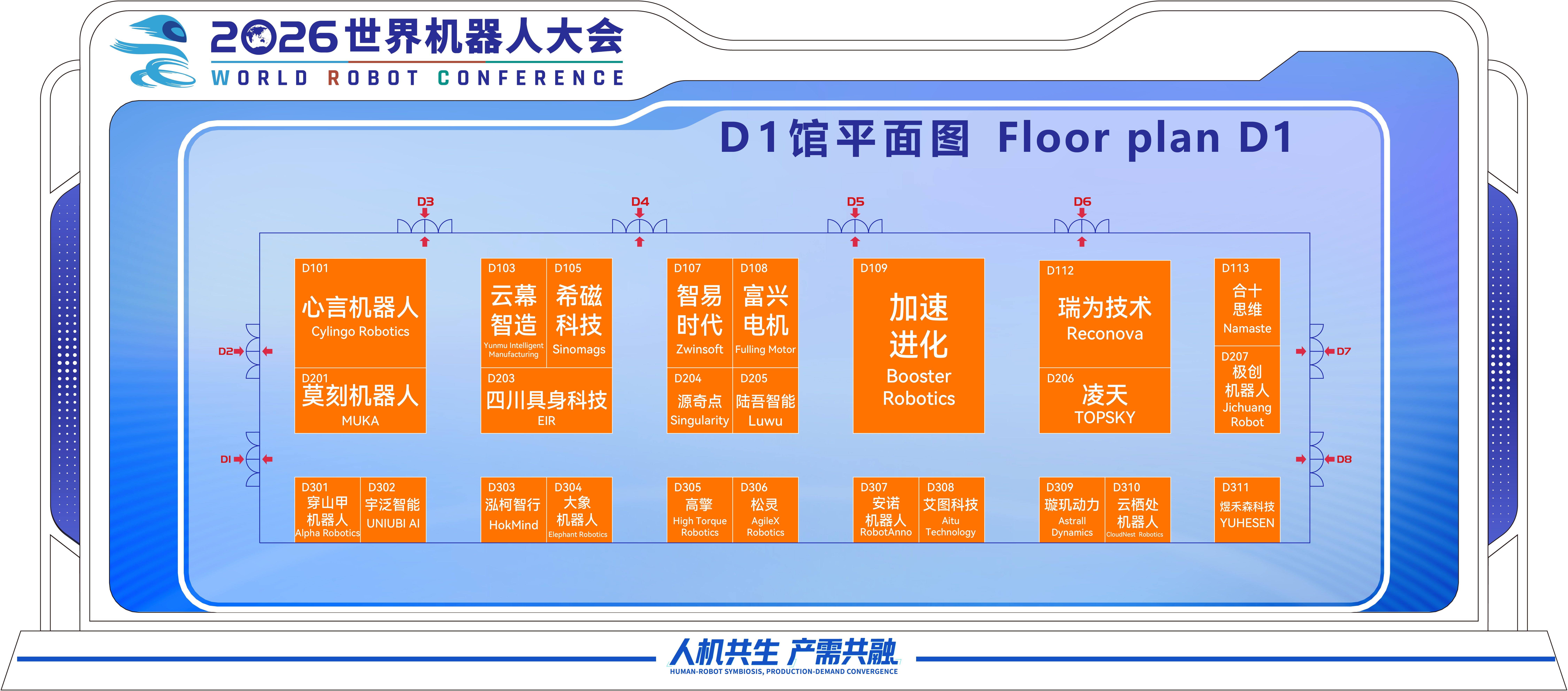
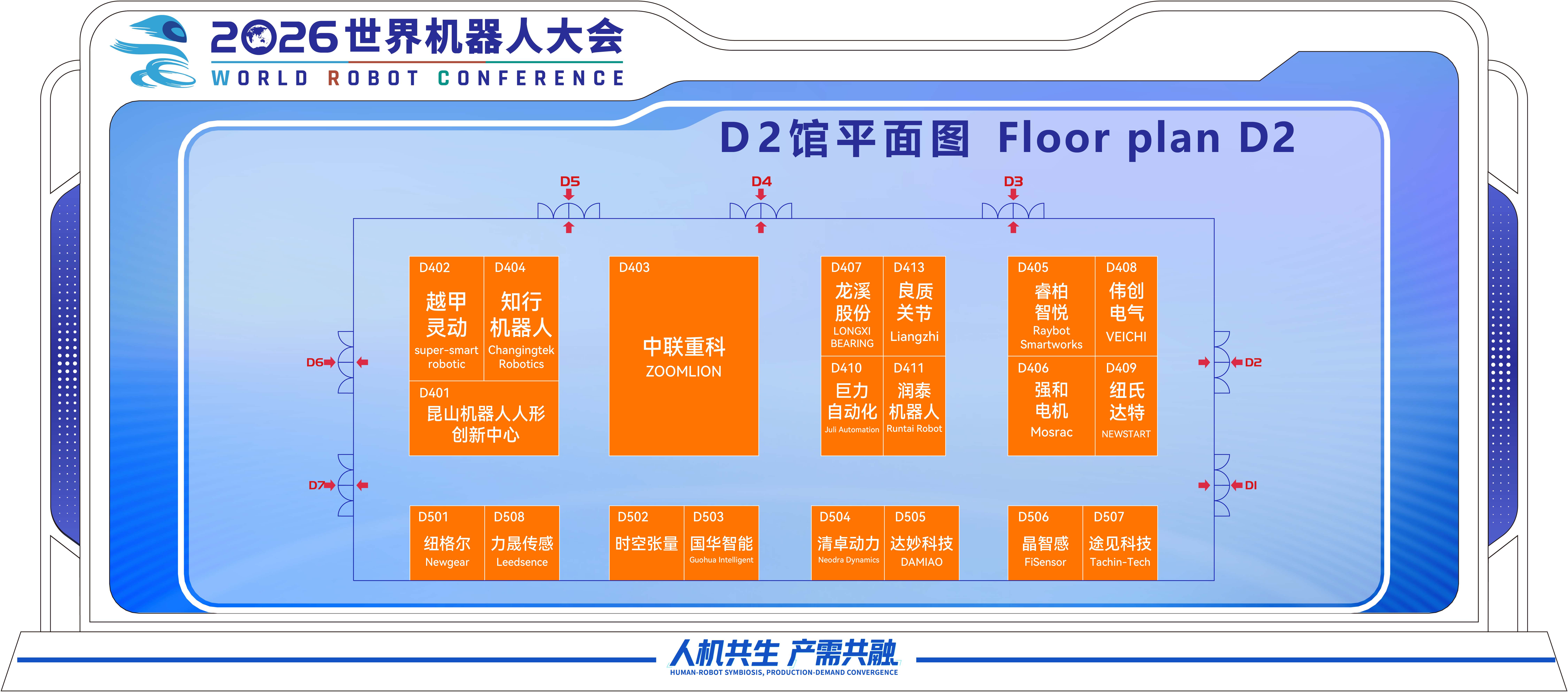
The official floor plans are image files rather than a versioned machine-readable booth dataset. A defensible route should therefore record the retrieval time, file URL, local hash, and a manual coordinate cross-check against the complete plan and the relevant hall plan [6] [7] [8] [9]. Apply the same procedure to D1 and D2 [10] [11]. A screenshot without date or source cannot show which revision was used.
The morning audit is simple. Open the official home page, activity directory, complete plan, and the three hall plans for that day's route [4]. Confirm that the event hours and entry notice have not changed. For every mandatory booth, compare the activity or exhibitor record with the hall image. Save the source time in the note. If the image changes, retain the old and new hash rather than overwriting the evidence.
Optical character recognition can help locate a booth number but should not resolve a conflict. Image compression, Chinese characters, dense labels, and shared stands make false matches plausible. A human should inspect the adjacent numbers and approximate coordinate. On site, physical signage and the official information desk are the final navigation check, but a verbal answer should be recorded with time and staff location rather than silently replacing the published artifact.
A booth becomes a mandatory route anchor only when official activity or exhibitor evidence agrees with the latest floor plan [5] [6]. The 2026-08-18 cross-check map-matched A201, A206, A410, A435; B103, B207, B222, B408; C223, C303, C306, C320; D107, D203, D302, D309 in D1; and D402, D504 in D2. This verifies location at retrieval, not same-day activity, timing, queues, or unchanged signage, so the visitor must recheck them that morning.
| Map artifact | Use | Morning check |
|---|---|---|
| All halls | entrances, hall adjacency, macro route | confirm hall labels, transitions, and latest image |
| Hall A | August 20 procurement and component scan | verify selected A numbers and nearest aisle |
| Hall B | hands, sensors, bodies, procurement follow-ups | verify B103 and provisional B stops |
| Hall C | August 19 Physical AI and integrated systems | verify C303 and C306; note shared zones |
| Hall D1 | release-day D circuit | determine which D activities fall in D1 |
| Hall D2 | release-day D circuit and overflow | determine which D activities fall in D2 |
12.4 August 19 — C to D for Releases and Physical AI
The first day is organized as C → D. Start in C because the strongest mandatory Physical AI anchors are close enough conceptually to establish a common question set. C303 is associated in the official activities directory with DexForce and a Physical AI forum; C306 is associated with AI² Robotics and a product interaction [5]. The point is not to accept either booth's framing. It is to compare model-to-controller boundaries, data capture, recovery, and deployment evidence while the questions are fresh.
At C303, ask what the demonstrated system observes, what it predicts or commands, which controller executes the action, and how a failed attempt is counted. Request the exact hardware and software version. Ask whether a human resets objects, chooses a grasp, teleoperates recovery, or approves completion. A forum statement can describe direction; a replayable trace or documented interface is stronger operational evidence.
At C306, use the same fields. Ask which observations feed the model, whether the action is a goal, skill, end-effector delta, or joint command, and what runs locally. Separate the public interaction from a factory deployment. Ask for first-attempt success, interventions, recovery time, cycle time, and the best conventional baseline. If customer details are confidential, ask for definitions and denominators without names.
The optional C circuit uses official activity listings as discovery leads. C223 lists an exhibit roadshow, and C320 lists a modular quadruped assembly demonstration; both locations matched the Hall C plan at review [5]. Recheck the activity and timing that day, and drop these stops before the core anchors if queues grow.
After lunch, transition to D for release signals and special-environment embodiments. The activities directory lists D402 for a smart-inspection release, D203 for embodied and interactive humanoid activities, D504 for a hybrid hydraulic-electric humanoid release, D309 for an autonomous-navigation challenge, D302 for a group-control performance, and D107 for an inspection-robot interaction [5]. At review, D107, D203, D302, and D309 matched Hall D1, while D402 and D504 matched Hall D2. Their locations are verified at retrieval, but activity and timing require a same-day recheck.
The D circuit should test release maturity. Ask whether “release” means announcement, order availability, production start, first delivery, or a customer acceptance. Record price status, delivery window, configuration, warranty, SDK, training, and service geography. For a special-environment robot, ask for full-payload mission duration, ingress-test configuration, communication-loss behavior, recovery procedure, maintenance interval, and consecutive mission evidence.
| Time | Route and purpose | Status | Contingency |
|---|---|---|---|
| 08:30–09:00 | arrive, reservation and entry buffer; do not schedule a booth claim before official opening | logistics recommendation | if entry is delayed, cut optional C stops |
| 09:00–09:20 | official home page, activity directory, All map, C map, D1/D2 map change audit | required verification | unresolved booth moves to optional list |
| 09:20–10:20 | C303 DexForce: Physical AI, data, controller, recovery | verified anchor at review point | if activity is delayed, collect static evidence and book a return slot |
| 10:20–11:20 | C306 AI² Robotics: model-to-embodiment boundary and factory evidence | verified anchor at review point | use a 15-minute interview cap if the queue exceeds the buffer |
| 11:20–11:45 | seated note normalization and hydration | required evidence hygiene | do not postpone notes until evening |
| 11:45–12:35 | C223/C320 discovery circuit | location matched at review; recheck activity | skip both if the map file or signage has changed |
| 12:35–13:20 | lunch and quiet review; identify missing common fields | flexible | carry food only where venue rules permit; do not assume a short queue |
| 13:20–13:40 | C-to-D transition using All map; confirm D1/D2 split | required navigation | ask official desk if D numbering is ambiguous |
| 13:40–15:15 | D203 in D1, then D402/D504 in D2 | location matched at review; recheck activity | choose at most two if activities overlap or distances expand |
| 15:15–15:35 | rest, battery check, file backup | required recovery | use paper notes if devices overheat or power is low |
| 15:35–16:20 | D309/D107 in D1 or return to a missed C anchor | location matched / fallback | prioritize one complete evidence record over three partial visits |
| 16:20–17:00 | close gaps, time-stamp conflicts, exit without a last-minute cross-hall sprint | synthesis | unresolved items become next-day desk questions |
The route deliberately leaves about forty minutes of non-booth work and several cancellation points. A launch can start late, a robot can be charging, or a decision maker can be absent. The right response is not to make up the lost evidence from a video loop. Record “not observed,” ask when the next run occurs, and protect the verified anchors.
12.5 The Booster Conflict: How Not to Route
The official activity directory and Hall B plan support Booster's AI-football activity at B103, while the official Hall D1 plan separately labels Booster Robotics at D109 [5] [8] [10]. D109 is therefore not unverified. The relationship may reflect two locations, an older allocation, or different functions; preserve both records and ask the organizer. Use B103 for the listed activity, but do not treat D109 as its fallback without confirmation.
This small discrepancy demonstrates a general failure mode. A copied spreadsheet, social post, old map, or manually typed itinerary can preserve an early allocation after the official directory changes. If a visitor treats both as valid, time is lost crossing halls. If an author deletes one without explanation, later readers cannot reconstruct why the route changed.
The resolution record should say: claim, source, retrieval time, status, and action. Here it preserves both the B103 activity record and the D109 plan label. The action is to use B103 for the listed AI-football activity and recheck both plans in the morning. If same-day signage differs, mark a new conflict and ask the organizer. Do not delete either official record or infer a replacement relationship before confirmation.
12.6 August 20 — A to B for Procurement, Arms, Hands, and Components
The second day is organized as A → B. Procurement Day changes the objective. The visitor should arrive with a use case, operating envelope, annual volume range, target delivery window, integration owner, and a short requirements sheet. A vendor conversation becomes more concrete when it includes payload at reach, cycle time, precision or repeatability definition, interface, safety responsibility, maintenance, warranty, lead time, price basis, and acceptance test.
Hall A is a broad procurement and component scan. The activity directory assigns Shanghai MOONS' presentation to A310, but the current Hall A plan labels A310 as CCTV and MOONS at A325 [5] [7]. Treat A310/A325 as an official-source conflict and remove MOONS from the core route until the organizer confirms the current location. A201, A206, A410, and A435 were map-matched at review; keep A435 as the core and the others as optional stops whose activities must be rechecked that day.
At a motor or joint supplier, do not ask only for peak torque. Ask for continuous torque, thermal condition, duty cycle, efficiency map, backlash or transmission behavior, encoder, communications, controller, ingress rating, lifecycle test, sample size, failure criterion, availability, minimum order, and change notification. At an arm booth, distinguish repeatability from absolute accuracy and force-control accuracy from sensor resolution. Ask for payload and precision across the workspace, not at one favorable pose.
Move to Hall B after lunch. B103, B207, B222, and B408 matched the Hall B plan and activity directory at review [5] [8]. B103 is the core Booster AI-football anchor, B207 and B408 are optional technical comparisons, and B222 is a schedule-dependent ecosystem conversation. Recheck every activity and time that day.
At B207, ask degrees of freedom, actuators, transmission, fingertip force, continuous thermal limit, tactile modalities, coverage, calibration, drift, overload, lifecycle protocol, repairability, hand mass, controller rate, SDK, ROS support, price, lead time, and replacement parts. Then ask for the task. A hand optimized for teleoperation data, industrial grasping, prosthetics research, and public interaction can have very different desirable properties.
At B408, connect sensing to the whole system. Ask bias, drift, noise density, calibration, synchronization, temperature behavior, shock, interface, sampling, fusion assumptions, and whether the announced device is sampling, qualified, or shipping. At B103, treat autonomous football as a bounded multi-agent demonstration. Ask what is onboard, what is external, how localization works, how falls and collisions are handled, and how the demo relates to a sold platform. A good procurement day does not erase the distinction between an engaging activity and a buyer-ready application.
| Time | Route and purpose | Status | Contingency |
|---|---|---|---|
| 08:30–09:00 | arrive, reservation and entry buffer; prepare requirement sheet | logistics recommendation | if delayed, drop A201/A410 |
| 09:00–09:20 | check official updates, All/A/B maps, and activity status | required verification | promote a provisional stop only after agreement |
| 09:20–10:10 | A435 arm workshop and interface questions | location matched at review; recheck activity | if workshop time changes, inspect static system and return only if core questions remain |
| 10:10–11:05 | one same-day-confirmed stop among A201/A206/A410 | location matched / optional | skip when it displaces note normalization |
| 11:05–11:35 | normalize Hall A specifications and evidence, or a second optional stop | required evidence hygiene / optional | exclude MOONS A310/A325 from the core until confirmed |
| 11:35–12:00 | seated comparison: specs, test conditions, lead time, service | required evidence hygiene | mark every unanswered field explicitly |
| 12:00–13:00 | lunch, procurement calls, A-to-B transition | flexible | agree meeting location by booth number plus landmark |
| 13:00–13:50 | B207 dexterous-hand diligence | location matched at review; recheck activity | choose another confirmed hand only after recording why |
| 13:50–14:35 | B408 IMU/sensor release and integration questions | location matched at review; recheck activity | treat release delay as “not observed,” not product failure |
| 14:35–15:25 | B103 Booster platform and bounded autonomy questions | verified anchor at review point | D109 is not a fallback; consult official desk if B103 changes |
| 15:25–15:45 | rest, battery, backup, card-to-note matching | required recovery | photograph cards only with consent and secure storage |
| 15:45–16:25 | prebooked supplier follow-up or B222 ecosystem meeting | optional | use time for a second technical witness if no meeting |
| 16:25–17:00 | shortlist, red flags, next-document requests, exit | synthesis | do not negotiate from an unverified show-floor claim |
Procurement evidence should end with documents and next actions. Request a dated data sheet, interface manual, quotation scope, delivery assumption, warranty, service region, test report, and sample evaluation agreement. Record whether each will be provided publicly, under NDA, or not at all. Do not interpret “available after the show” as received evidence.
12.7 One-Day Sprint — C to B to A
The compressed route is C → B → A. It prioritizes one model-and-system comparison, one hand/body-and-sensor comparison, and one component-and-arm comparison. It is not two days squeezed without loss. D is removed because returning across the venue is costly. The sprint protects C303, C306, and B103 first, then adds one of B207/B408 and A435; MOONS stays out until the A310/A325 conflict is resolved.
The sprint requires prework. Register online, save all six maps, prepare six common questions, charge devices, and ask key contacts for a fifteen-minute window. Put every desired booth into three tiers: mandatory, optional, discovery. A mandatory stop needs an official source and a decision-relevant question. “Looks interesting” belongs in discovery.
| Time | Hall sequence | Evidence objective | Cut rule |
|---|---|---|---|
| 08:30–09:00 | arrival | entry buffer and offline map readiness | no booth promise before 09:00 official opening |
| 09:00–09:15 | All/C/B/A maps | change audit; confirm C303, C306, B103 and selected provisional stops | any unresolved location becomes optional |
| 09:15–10:05 | C303 | Physical AI observation/action/controller/recovery record | leave after one complete record, even if demo repeats |
| 10:05–10:55 | C306 | integrated VLA/robot and deployment-evidence record | cap queue plus visit at 50 minutes |
| 10:55–11:15 | C note station | normalize terms and identify one cross-booth question | cut C discovery first |
| 11:15–11:35 | C → B | transition and hydration | no opportunistic detour unless a mandatory booth is cancelled |
| 11:35–12:20 | B103 | bounded autonomy, onboard/external stack, product status | keep; D109 is not an alternate |
| 12:20–13:00 | B207 or B408 | one location-matched hand or sensor comparison | select only after same-day activity confirmation |
| 13:00–13:40 | lunch | backup, contact matching, rest | protect at least 30 minutes seated |
| 13:40–14:00 | B → A | transition using All map | if congested, shorten optional A stop, not synthesis |
| 14:00–14:45 | A435 | arm, interface, precision, safety, service | if activity moved, conduct static product interview |
| 14:45–15:30 | one of A201/A206/A410 | same-day-confirmed exoskeleton, launch, or integration comparison | exclude MOONS A310/A325 until the organizer confirms |
| 15:30–15:50 | rest | battery and evidence audit | stop capture if files are not backing up |
| 15:50–16:30 | best unresolved stop | one return or prebooked procurement meeting | never cross two halls for a speculative lead |
| 16:30–17:00 | quiet closeout | confidence labels, conflicts, document requests | leave with gaps explicit |
The one-day visitor should accept asymmetry. Two excellent twenty-minute technical conversations are more valuable than ten booth photographs. If the morning map moves one verified anchor, the route does not collapse: preserve the hall order, confirm the new location, and remove an optional stop. If entry takes an hour, remove discovery and the final return window.
12.8 The Booth Interview as a Comparable Experiment
Start every conversation with a one-sentence context: role, application, and why the question matters. Ask permission to take notes. Then identify the model and configuration in front of you. A generic company answer attached to the wrong hardware is difficult to repair later.
Use a five-layer interview. First, claim: what exactly is being demonstrated or released? Second, conditions: payload, speed, environment, network, setup, operator, and number of attempts. Third, boundary: what is autonomous, scripted, teleoperated, or externally computed? Fourth, maturity: prototype, orderable product, production, shipment, installation, active deployment, or renewal. Fifth, evidence: data sheet, test report, customer acceptance, logs, certification, or named contact.
For demonstrations, ask how many attempts occurred and what happened before the visible run. Ask who resets, whether failures are shown, and whether the robot uses a fixed scene. For procurement, ask what changes between the show configuration and delivered configuration. For releases, ask the date from which a buyer can receive a unit and which features are current versus planned software updates.
End with a read-back: “I recorded this as a manufacturer-stated laboratory specification under these conditions; is that accurate?” This gives the representative a chance to correct the scope. Record their role, not unnecessary personal details. If they cannot authorize a claim, label it “booth conversation—unverified” and request an official document.
| Evidence field | Good note | Weak note |
|---|---|---|
| identity | model, revision, payload, software, date | company name only |
| performance | metric, unit, condition, trials, failure rule | “very accurate” |
| autonomy | onboard/external functions, human actions, fallback | “AI powered” |
| maturity | orderable date, shipped/installed/active definition | “mass produced” without denominator |
| source | official document URL or named activity record | memory after the show |
| confidence | verified, provisional, conflict, booth-only | no status |
12.9 Accessibility, Rest, and Logistics
The official Beijing listing provides the venue, street address, hours, online-reservation requirement, and subway approach [1]. It does not, in the admitted packet, provide a complete current accessibility manual covering step-free entrances, elevators, wheelchair routes, accessible toilets, quiet rooms, seating, mobility-device loans, or priority entry. Those facilities must therefore be marked unverified, not assumed absent or present.
Visitors who need step-free access should contact the official service channel before travel and reconfirm at the entrance. Ask for the specific accessible gate, the route between A, B, C, D1, and D2, elevator or ramp availability, restroom locations, seating, and emergency assistance. Save the response and date. On site, ask staff before following a crowd into a staircase or narrow connector.
The schedule budgets a seated break approximately every ninety minutes and protects lunch. This is not lost productivity. Fatigue reduces listening accuracy, increases navigation mistakes, and produces poorly attributed notes. Wear comfortable shoes, carry only venue-permitted items, hydrate, and avoid placing bags in aisles or robot operating zones. The official notice describes a Robot Shopping Street and food experiences, but queues, dietary options, seating, and payment cannot be assumed [2].
Network congestion and battery drain are predictable. Save maps offline, carry a compliant power bank, use airplane mode when appropriate, and keep a paper fallback with the three verified anchors. Back up notes during breaks. Do not rely on a QR code remaining visible after the booth closes. Keep business cards paired with the relevant note immediately.
Meet colleagues at an unambiguous landmark plus a booth number, not “Hall B entrance,” which may have multiple approaches. Add a fifteen-minute buffer before any booked conversation. If the group has different mobility or sensory needs, route to the slowest comfortable pace and split optional stops rather than forcing a shared sprint.
12.10 Photo, Video, and Field-Capture Ethics
A public exhibition is not permission to record everything. Follow organizer and booth signage, and ask a representative before close-up product photography, screen capture, audio recording, or filming a technical conversation. If permission is limited to personal reference, do not publish the material. A “no photo” answer is an evidence boundary, not an invitation to capture secretly.
Avoid collecting faces, badges, phone screens, customer documents, laptop terminals, whiteboards, QR credentials, and conversations unrelated to the exhibit. Frame the product tightly. When visitors or staff are identifiable, obtain consent or wait for a clear frame. Children require particular care and appropriate guardian consent. Do not block aisles, cross barriers, touch equipment, or use bright lights that could interfere with a robot or operator.
Separate observation from interpretation. Name files with date, hall, booth, model, and sequence. Record whether the robot was autonomous, scripted, teleoperated, or unknown. Do not publish a cropped failure as representative without the attempt context; do not publish a successful clip as reliability evidence without a denominator. Preserve the original file and create a derivative for annotation.
When asking for specifications on video, tell the speaker that recording is active and how it may be used. Offer an off-camera option. For later publication, verify important numbers against an official document and give the company a chance to correct transcription without surrendering editorial independence. Protect contact information and delete material that has no research purpose.
The most ethical field capture is often a written observation grid. It is less intrusive, forces the observer to distinguish fact from inference, and can record negative evidence such as “recovery not shown” or “test condition not disclosed.” Photography should serve provenance and explanation, not replace them.
12.11 Same-Day Change and Failure Playbook
The route should fail gracefully. The first failure class is location change. Recheck official home, activity directory, hall plan, signage, and information desk. Record the conflict. Update the route once, tell collaborators, and remove a lower-priority stop. Do not spend thirty minutes triangulating a nonessential booth.
The second is activity change. A release or demonstration can move or be cancelled while the booth remains. Separate booth existence from activity status. Visit the booth for configuration and documents if the company is still present, but record “scheduled activity not observed.” Do not infer a technical failure.
The third is queue or access failure. Set a maximum queue budget—fifteen minutes for optional stops and twenty-five for anchors is a reasonable planning rule, not an official limit. If exceeded, ask for the next run or a contact, capture the public model label with permission, and return only if the unanswered question is decision-critical.
The fourth is device failure. If a robot faults during the visit, observe the recovery without crowding. Record whether staff reset, swap hardware, change the environment, or end the demonstration. Ask neutrally whether the event is part of normal protection. One fault is not a reliability rate, just as one success is not a reliability rate.
The fifth is observer failure. If notes become inconsistent, battery is low, or fatigue rises, stop. Normalize the last two visits, back up files, rest, and cut discovery. A shorter trustworthy dataset is the goal.
12.12 From Field Notes to an Evidence Matrix
Each evening, transform raw notes into a matrix before memory fills gaps. One row should represent one product configuration, not one company. Columns should include hall, booth, source status, observed task, operating mode, human intervention, disclosed metrics and conditions, maturity, SDK, price status, service, requested documents, conflicts, and confidence.
Use three layers of text. Observation states what was visible: “robot grasped three identical objects in a prepared bin.” Attributed claim states what a representative or official page said: “representative stated shipment began in June; document requested.” Inference states the analyst's interpretation: “task appears fixture-dependent.” Keeping the layers separate prevents a strong impression from becoming a sourced fact.
Compare only matched fields. A hand's degrees of freedom is not its task success. A humanoid's group dance is not its factory uptime. A Physical AI forum is not a reproducible model benchmark. A signed order is not an active installation. The preceding chapters provide the category-specific fields; the show visit supplies updated configuration and evidence leads.
Prioritize follow-up by decision impact and uncertainty. A safety certificate, interface manual, reliability log, clinical label, or quotation scope may change a decision. Another promotional video rarely does. Send the follow-up within two business days, attaching the exact question and product version. Mark promises as pending until the document arrives.
12.13 Field-Capture Checkpoint
The show floor is not a manufacturing cell, but the same disciplined loop applies. The task schema is the route: question, anchor, observation fields, time budget, and fallback. The data schema is the note template, source URL, media metadata, and confidence label. The KPI is not booths visited; it is complete comparable records, verified conflicts, and decision-relevant follow-ups.
Safety ownership is shared but explicit. The organizer and exhibitor control their zones and demonstrations. The visitor follows barriers, signage, consent, and staff instructions. The research lead controls collection scope, privacy, file security, and publication. A procurement lead owns requirement interpretation and commercial follow-up. Nobody should step into a robot workspace to improve a photograph.
| Checkpoint | Pass condition | Owner |
|---|---|---|
| route version | official URLs, retrieval time, hashes, and morning changes recorded | route lead |
| anchor status | verified/provisional/conflict label with evidence | evidence lead |
| observation | model-level record with task, mode, conditions, and human actions | interviewer |
| capture ethics | permission, minimal personal data, secure storage, publication scope | media lead |
| logistics | reservation, access needs, breaks, offline maps, charging | each visitor / group lead |
| follow-up | missing document, responsible contact, deadline, decision impact | procurement or research owner |
At the end of each hall, ask three questions: What claim became stronger? What claim became weaker? What remains unknown? If the notes cannot answer them, the route has produced exposure rather than evidence.
12.14 Limitations
This guide uses only the official WRC, Beijing government, and official floor-plan evidence admitted in the chapter packet. It deliberately excludes social media, company invitations, travel blogs, map aggregators, and private messages, even when they might contain newer routing hints. This improves provenance but can lag a last-minute operational change.
The event has not yet occurred at the chapter's review date. Times in the route tables are author recommendations inside the official 09:00–17:00 window, not organizer appointments. Provisional activities may run at specific times not captured here. Queues, security, hall transitions, meal access, weather, transit disruptions, and accessibility services can alter the plan.
The official maps are images and may be replaced at the same URL. A later reader cannot assume the linked pixels match the version reviewed for this text. That is why the field workflow requires retrieval time and hash. The chapter does not reproduce the images; later map overlays require source attribution, version control, and a final manual check.
Verified booth status remains bounded. It confirms agreement among official routing artifacts, not company participation until the doors open, activity execution, product presence, or technical claims. Provisional does not mean false. Conflict does not identify which source will ultimately prevail.
Accessibility recommendations are cautious because the admitted official packet does not provide a complete facility guide. Visitors should obtain current, individualized information from official channels. Photography and privacy guidance is a field-ethics protocol, not legal advice; venue rules and applicable law control.
Closing Synthesis
The twelve chapters of this atlas move from industry scale and selection rules through bodies, arms, mobility, touch, data, models, and specialized markets. WRC is where those layers appear side by side, but proximity can create false comparability. The final discipline is to preserve each claim's unit, source, condition, date, and maturity level while walking.
On August 19, use C to establish Physical AI questions and D to test what a release actually makes available. On August 20, use A to inspect component and arm constraints and B to connect hands, sensors, bodies, and procurement evidence. If only one day is available, use C → B → A and accept that a smaller, cleaner evidence set is the success condition.
A good visit ends with fewer unsupported beliefs than it began. It records what was observed, what was said, what official artifact supports it, what changed, and what must be verified after the show. That is the practical meaning of an evidence-based company map: not a static ranking, but a route that can update without losing its reasoning.
References
- Beijing Municipal Government (2026a). 2026 World Robot Conference Event Calendar Entry. Official dates, hours, venue, address, transit, area, and reservation notice.
- Beijing Municipal Government (2026b). World Robot Conference 2026 to Start on August 19: Highlights at a Glance. Official programme notice for themed days, expected scale, zones, and visitor services.
- Beijing Municipal Government (2026c). Beijing Announces the 2026 World Robot Conference. Official launch announcement and forward-looking scale.
- World Robot Conference (2026a). WRC 2026 Official Website. Official updates and registration entry point.
- World Robot Conference (2026b). Official Activity Directory: page 1, page 2, page 3, page 4, and page 5. Organizer booth-and-activity records used as dated routing evidence.
- World Robot Conference (2026c). Complete Expo Floor Plan. Official image-based all-hall plan.
- World Robot Conference (2026d). Hall A Floor Plan. Official image-based plan.
- World Robot Conference (2026e). Hall B Floor Plan. Official image-based plan.
- World Robot Conference (2026f). Hall C Floor Plan. Official image-based plan.
- World Robot Conference (2026g). Hall D1 Floor Plan. Official image-based plan.
- World Robot Conference (2026h). Hall D2 Floor Plan. Official image-based plan.
- Ajay Mandlekar et al. (2021). RoboMimic: A Benchmark for Robot Learning from Demonstration. arXiv:2108.03298.
- Viktor Makoviychuk et al. (2021). Isaac Gym: High Performance GPU-Based Physics Simulation for Robot Learning. arXiv:2108.10470.
- Nicholas Paine et al. (2014). Design and Control Considerations for High-Performance Series Elastic Actuators. DOI:10.1109/tmech.2013.2264338.